All Blog Posts

Best Practices for AI Literacy in Education: Empowering Students, Teachers, and School Leaders with Brisk

AI Literacy Explained

AI literacy refers to the knowledge and skills needed to think critically about AI tools and use them in safe and ethical ways. 

As an AI-powered Chrome extension, Brisk allows you to easily promote AI literacy among students, teachers, and school district administrators. Brisk’s integrated security practices and safeguards enable students to engage with AI in a monitored environment while ensuring adults in the school can use these tools with confidence and responsibility. 

‍

Digital Equity

To address AI literacy, one should consider the importance of digital equity. Every student and teacher deserves access to AI tools regardless of their background or socioeconomic status!

Brisk was designed with accessibility in mind. For starters, Brisk is free for all teachers! Most features are available with the free plan, so no teacher loses out on opportunities to save time and increase productivity. As teachers experience the advantages of Brisk, their students can benefit from these perks as well. 

Brisk also provides free professional development materials. It’s easy to use and adjust when needed— supporting equal access for all!

‍

Using Critical Thinking & The 80/20 Rule

One of the best ways to ensure AI is used effectively is to implement critical thinking and the 80/20 rule. 

Critical thinking is irreplaceable, even when using the most innovative AI technology found with Brisk. Training teachers (and students) to analyze and judge the work generated by AI is essential because, let’s face it, even the best AI tools can make mistakes, too!

Consider critical thinking questions such as these:

  • Are there any biases within the content?
  • What credible evidence supports this information?
  • Is there anything I already know contradicting this information or that wasn’t included?

By preparing educators and students to think critically, you position them to expect to complete a portion of the work themselves— this is the 80/20 rule. Brisk can complete 80% of the work, but individuals should perform 20% by finalizing the content with their personal touch and expertise.

‍

Best Practices for AI Literacy

AI literacy may look a little different for students, teachers, and districts, but it’s necessary across all levels of education:

‍

AI Literacy for Students

When considering best practices for AI literacy and students, It’s important to help students set clear goals. Teach them to critically evaluate and consider their desired goal of using an AI-powered tool before diving in with one such as Brisk. Inform them of the 80/20 rule and demonstrate how to put it into action.  

Show students how AI tools integrate with traditional learning methods like peer feedback, research platforms, and memorization.

Brisk Boost

Brisk Boost is a great option to introduce to students and aid in teaching AI literacy! The student-facing tool from Brisk Teaching was created as a direct result of feedback from real teachers who have used (and loved!) Brisk. It allows students to interact creatively and safely with AI-powered learning activities. With this tool, teachers can monitor student engagement with the content in real time. This ensures total transparency and a focused learning environment as students learn how to responsibly engage with AI. 

As students learn to participate with AI safely and responsibly, learning experiences are enhanced!

*The web version of Brisk Boost is free, while the student-facing Chrome extension is a premium offering for schools and districts.

‍

AI Literacy for Teachers

Teachers can lead by example when it comes to AI literacy. Brisk is designed to make AI integration simple, as it lives exactly where teachers are already working within Google Chrome. 

To maximize AI in the classroom with Brisk, teachers can:

  1. Embrace AI for routine tasks
  2. Utilize professional development
  3. Collaborate easily with students

Brisk can handle timely and mundane teaching tasks like generating slideshows, providing essay feedback, and creating lesson plans. By spending less time on these tasks, teachers can return to doing what matters most— building relationships with students and sharing their expert knowledge.

The professional development options provided by Brisk help teachers stay up-to-date with Brisk’s features as they confidently and responsibly incorporate AI into their classrooms. 

Collaboration with students can also become more seamless by using Brisk to give personalized feedback and provide opportunities for increased classroom community through icebreakers and AI-generated discussion prompts. 

‍

AI Literacy for Schools and Districts

As a district leader, your role in promoting AI literacy is of utmost importance! By modeling this skill, you can help create a forward-thinking and efficient learning environment for students and teachers alike. 

Brisk helps you:

  • Empower teachers as they save time and increase productivity
  • Use data-driven insights to make informed decisions
  • Prioritize privacy
  • Boost student engagement

Brisk for schools and districts is truly the best choice for leaders who want to maximize their staff’s efficiency and effectiveness. You can be confident that the content your teachers create with Brisk is aligned with state and national standards, so your teachers are always on target, and your students are engaged in high-quality learning.

The top-level and detailed reports track usage, progress, and more— allowing you to make data-driven decisions for your school communities. 

Student and teacher privacy is another necessary component of AI literacy! Brisk works with districts to create custom privacy agreements to meet all local regulations and privacy needs. 

‍

Embrace AI Literacy with Brisk

Are you ready to take your next step toward embracing AI literacy within your district?

Book a demo today to learn more about how Brisk can transform the classrooms and schools you lead. 

AI literacy is vital to current and future education, and Brisk provides the tools you need to implement AI safely and responsibly in your schools. Be confident that you are creating an equitable and efficient educational environment for students, teachers, and your district by implementing these best practices for AI literacy.

Latest Posts

Latest from the Brisk Blog

Explore practical articles for K–12 educators, from classroom-ready strategies to thoughtful guidance on using AI in ways that support real teaching.

Library shelves filled with books
September 18, 2026
Administrators

Everyone Has Questions About AI — Here’s How Leaders Can Address Them

As district leaders face a growing number of questions about how they’re handling AI, they need both visibility into AI use and the power to shape it.

Library shelves filled with books
September 14, 2026
Brisk Features

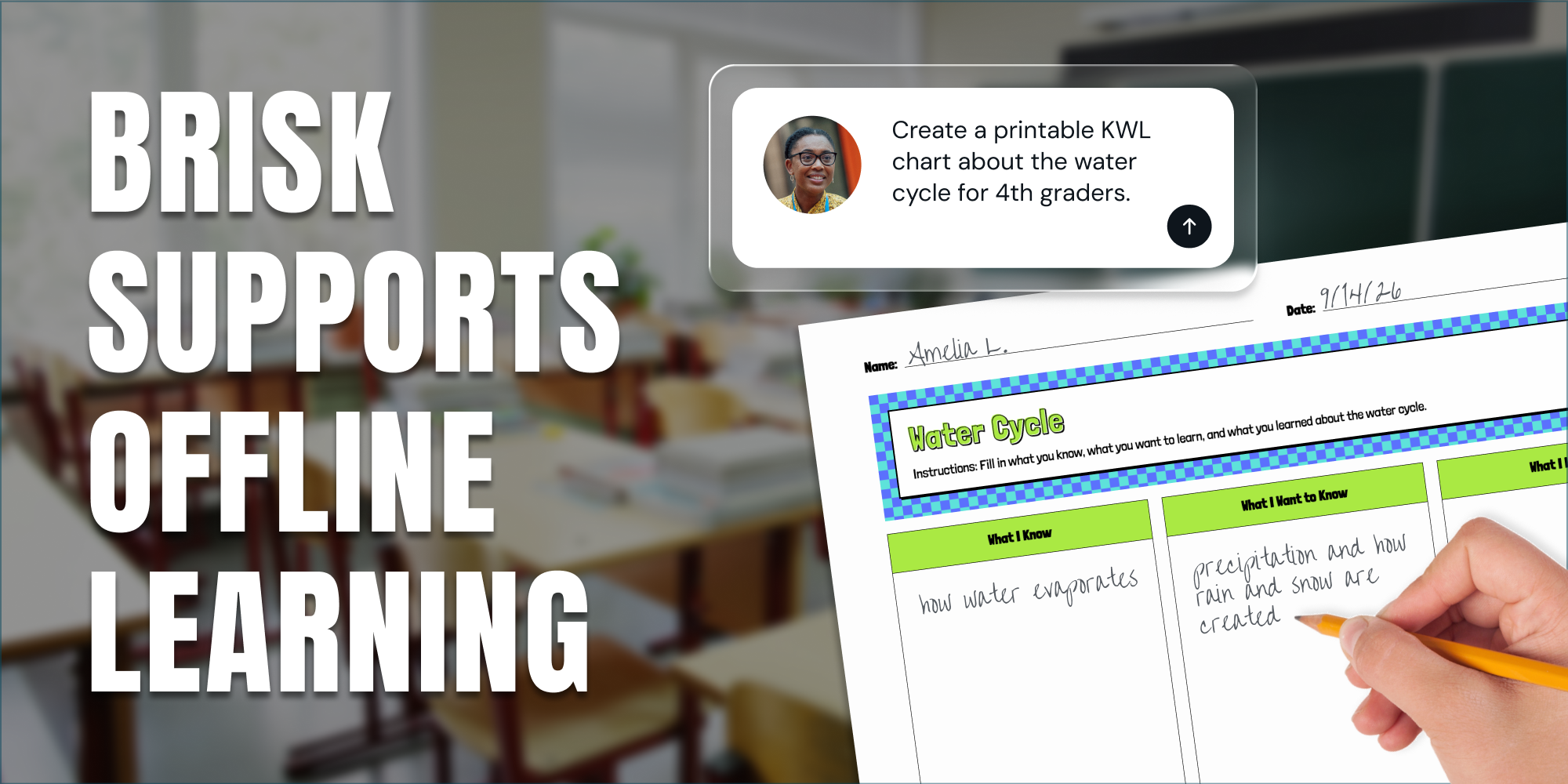
Print It, Project It, or Skip the Screen: How Brisk Fits Any Classroom

Brisk provides teachers with a variety of ways to support student learning, even when they’re focused on scaling back screen time in their classrooms.

Library shelves filled with books
August 14, 2026
Thought Leadership

Brisk in New White Paper on AI's Instructional Impact

Brisk founder Arman Jaffer shares his key takeaways from Whiteboard Advisors’ new white paper on measuring the instructional impact of AI in the classroom.

Library shelves filled with books
8
min
December 1, 2025
Tips for Teachers

AI Literacy for Students: A Teacher’s Guide to Preparing Students for the Future

Discover what AI literacy means in today’s classrooms and how to build AI literacy for students through practical routines, supportive teaching strategies, and clear expectations. This teacher-friendly guide offers simple ideas, student-centered practices, and natural ways to integrate AI tools like Brisk into your instruction.

As AI becomes embedded in daily routines, students are engaging with it independently — well before it shows up in the classroom. Teaching AI literacy for students is no longer about learning one tool. It’s about helping them understand how AI works, how to use it responsibly, and how to stay curious as the world around them changes.

When we build AI literacy for students, we strengthen the skills that matter most, like critical thinking, problem-solving, and digital citizenship. Students learn to ask better questions, evaluate information more carefully, and use AI to support their learning rather than avoid it. This guide breaks down what that can look like in your classroom, using strategies that feel practical and manageable for real teachers.

‍

What AI Literacy Looks Like in the Classroom

Understanding AI in Student-Friendly Language

Students do not need technical definitions — they need simple, clear explanations that help them see AI as a tool created by people. You might describe AI as a system that learns patterns, similar to how students learn spelling rules or multiplication facts. This approach removes the intimidation factor and builds curiosity. When students understand the basics, they feel more confident exploring new tools.

Using AI to Support Thinking, Not Replace It

One of the core pieces of AI literacy for students is showing them that AI can help brainstorm, draft, explain, or clarify, but it does not replace their own ideas. When students see AI as a helper, they stay engaged in the thinking process. They make stronger choices, ask better questions, and reflect more deeply on their work.

Building Responsible Use Habits

Instead of strict rules, focus on expectations that help students make thoughtful choices. Model how you ask AI questions, what you accept, and what you double-check. When routines are clear, students develop habits that transfer beyond your class. These habits strengthen digital citizenship and give students the tools they need to navigate an AI-shaped world.

‍

Essential AI Literacy Skills for Students

Critical Thinking and Questioning

AI responses are not always correct; students need practice analyzing accuracy and asking follow-up questions. A simple activity is comparing their answer to an AI-generated answer and discussing strengths in each one. This type of reflection builds independence and supports stronger academic writing and research skills.

Creativity and Problem Solving

AI should spark creativity, not limit it! Let students use AI to help brainstorm ideas for a project, generate alternate endings for a story, or create variations of a concept. Students stay in the lead, and AI becomes a partner that helps them take creative risks they might avoid on their own.

Looking for a tool to enable students to engage with AI safely? Brisk Boost is a free tool that allows teachers to create guided, interactive, AI-powered experiences for students that help build confidence and digital literacy.

Ethical Awareness

Bias, privacy, and fairness can be taught in age-appropriate ways. Students begin to understand that AI tools are shaped by the data they learn from, which means they can make mistakes. These discussions help students think about digital spaces more thoughtfully and make informed choices.

Collaboration and Communication

Students can use AI to help draft feedback, generate discussion questions, or organize ideas for group work. These practices strengthen communication skills and help students learn how to use AI in collaborative settings, a key part of AI literacy for students.

‍

Practical Ways to Build AI Literacy Into Daily Instruction

Start With Quick, Low-Lift Routines

Simple activities help students build confidence, like predicting how an AI tool might answer a question or comparing two AI-generated examples to decide which one is stronger. These routines encourage students to think critically about quality and accuracy.

Integrate AI Into Work Students Already Do

AI can support vocabulary building, summarize complex text, scaffold research questions, or help students outline a writing piece. When AI fits naturally into existing tasks, students stay focused on learning goals rather than the tool itself. This approach reduces frustration and boosts engagement.

Model Purposeful Use

Share your own thinking out loud. Explain why you asked a certain question or why you revised the AI’s answer. Students learn not just how to use AI, but why certain choices matter. Clear expectations make the learning experience feel supportive and manageable.

Lean on Brisk When You Need Support

If you want to preview or adapt an AI activity before introducing it to students, Brisk can help you rewrite or differentiate materials in minutes. It is also a quick way to communicate with families. You can use Brisk to draft a warm, simple explanation of how your class is approaching AI literacy for students.

Not yet a Brisk user? Download Brisk to save time and simplify your planning.

‍

Helping Students Reflect on Their AI Use

Use Reflection Routines to Build Metacognition

Reflection does not have to be long. Try exit tickets that ask:

  • What did AI help you understand today?
  • What did you revise or question?
  • What would you do differently next time?

These short routines make students aware of their choices and the impact those choices have on their learning.

Educators can use Brisk to generate exit tickets that foster meaningful reflection — in the click of a button. Download Brisk for free today.

Encourage Peer Conversations

Pair or group discussions about prompts, strategies, and outcomes help students learn from one another. These conversations build community, reduce confusion, and help students feel more comfortable exploring new tools.

‍

Supporting Diverse Learners in AI Literacy

Scaffolded Prompts for Accessibility

Provide sentence starters or guided questions that help students use AI without feeling overwhelmed. When supports are available, all students can participate meaningfully, which boosts confidence.

Multiple Ways to Show Understanding

AI can generate outlines, visual organizers, summaries, or practice questions. Students can choose the format that helps them show what they know. This flexibility creates access without lowering expectations.

Building Agency

Let students choose which AI strategies work best for them. Choice encourages ownership, and ownership leads to stronger engagement.

‍

Helping Families Understand Student AI Literacy

Families want clarity, not technical detail. Share a short explanation of what AI literacy means, how it supports student learning, and what your expectations look like in class. If you need help drafting a letter or newsletter blurb, you can use Brisk to create a friendly, accessible message that builds trust and transparency.

‍

Looking Ahead: Preparing Students for an AI-Shaped Future

You do not need to be an AI expert to teach AI literacy for students. You simply need to model curiosity, ask thoughtful questions, and create space for exploration! When students learn to use AI responsibly and confidently, they are better prepared for a world where digital tools evolve quickly.

The most important thing they learn from you is that they can handle new technology with flexibility and purpose. Your openness gives them the permission to try, reflect, and grow in ways that will stay with them long after they leave your classroom.

‍

Use Brisk to create resources on AI literacy for your classroom — a lesson plan, a quiz, a presentation, guided notes, and so much more. Get started with Brisk for free today.

READY TO BRING BRISK TO YOUR DISTRICT?

See how 20,000+ districts adopted AI with full compliance and teacher buy-in from day one.