

Nouveautés
Ajoutez cette page à vos favoris pour retrouver toutes les mises à jour de Brisk au même endroit. De nouvelles fonctionnalités sont déployées chaque semaine, ne les manquez pas !
What's New with Brisk
Never miss a Brisk launch. Whether you're leading PD, sharing Brisk with a teammate, or presenting at a conference, this deck is designed to make it easy to show What's New.
Create Wayground Assessments Without Leaving Brisk
September 29, 2026
You can now bring Brisk’s high-quality instructional support into the Wayground assessments you love in a single step!
How it works:
- Open Brisk, type “Wayground” into the search box, and select Wayground from the search results. (Alternatively, type “quiz” into the search box and select Wayground as your output format.)
- Brisk will generate your assessment directly in your Wayground account, where you can edit it like anything else you build there.
(Note: Assessments created this way count toward Brisk’s Free plan quiz-creation limits. There are currently no creation limits on EdPro or School & District plans.)

Give Students a Safe Way to Explore Any Topic with Quick Chat
September 29, 2026
Not every student activity needs detailed learning objectives and in-depth context. Sometimes you just want students to explore a topic in a safe, open-ended AI chat. That’s when you can turn to Quick Chat, a Boost activity you can launch with just a few clicks.
How it works:
- Open Brisk, type “quick chat” into the search box, and select Quick Chat. (Alternatively, click Boost Activity from the main Brisk menu, then select Quick Chat.)
- Type a topic or use any existing webpage or resource as the chat’s starting point.
- Adjust grade level, time limit, and language as needed, then click Create.
- Share the link or QR code with students. They’ll be able to explore the topic and ask Brisk questions about it.
Quick Chat runs with the same safety net as every Boost activity, including real-time flags for inappropriate language, a monitoring dashboard, and the ability to pause any student mid-activity.
(Note: Quick Chat is currently available in the Brisk extension. It’s not yet in Brisk on the web.)
Use Brisk Tools Directly in ChatGPT
September 29, 2026
With the Brisk App, your favorite Brisk tools are now just a sentence away in ChatGPT. Tell ChatGPT what you need and it will build it in your Brisk account. It’ll then provide you with ready-to-use links to your new resource — no more jumping between tabs!
What teachers can do in ChatGPT with the Brisk App:
- Create Boost activity: Builds an interactive, AI-powered student activity (e.g., tutor, quiz-me, debate, exit ticket, writing coach) with learning objectives and guardrails. The activity always starts as a draft you can review before sharing with students.
- Generate activity ideas: Suggests a set of Boost activity ideas for a topic. No commitment until you create one.
- Create teaching resource: Creates a lesson plan, quiz, rubric, worksheet, sub plan, or other resource as a Google Doc or Google Form.
- Set up Batch Feedback: Creates an assignment shell for grading a set of student work. You add submissions and run feedback in the Brisk web app.
- List standards: Looks up relevant standards in Brisk’s database and confirms them with you before applying them, ensuring all your materials align with the right subject, grade level, and state.
- Get teacher context: Reads your course names, grades, and subjects — never student data — so ChatGPT can tailor its suggestions to your unique needs.
Connect ChatGPT to Brisk:
- You’ll need a Brisk account, a ChatGPT account, and, for any tool that creates a Google Doc or Google Form, a Google account that’s connected to your Brisk account.
- Open ChatGPT on the web or in the desktop app.
- Go to the Brisk App page and click Install Plugin.
- Sign in to your Brisk account and click Allow.
- Start a request with “Use Brisk to…” and ChatGPT will use your favorite Brisk tools to accomplish your task.
Brisk’s Web App Just Got Easier to Navigate
September 29, 2026
Brisk’s web app has a new look. Its navigation moved from the top of the screen to a collapsible bar on the left, and its fonts and illustrations now match what you see in the Brisk extension.
Nothing was removed and nothing is new. A few things just moved:
- Admin Portal and Open Extension now live in the left bar instead of the header.
- Quick Create lives on your My Library page.
- You can collapse the left bar if you want a full-width view of your content, and the bar collapses on its own for full-screen pages like your Brisk Next results. (Note: On mobile, there’s no left bar. Navigation still lives behind the hamburger menu.)
Use Your Documents to Build District Guidance
September 29, 2026
For administrators:
To date, setting up District Guidance has involved typing your instructional priorities, pedagogical frameworks, and priority standards into text boxes one category at a time. Not anymore: You can now upload documents with this information instead.
Add a strategic plan, pedagogical framework, or priorities memo from Google Drive, OneDrive, or your computer (up to 25MB) and Brisk will use it to inform draft District Guidance you can review, edit, and save. If you’ve already written guidance for your district, uploading a new document won’t erase it. Brisk blends the new guidance from your document with what already exists.
Create Polished, Print-Ready Activities That Cover Any Topic
August 25, 2026
If you feel like your students need a break from screens, we’ve got some great news: Brisk now includes a Printables Generator!
Brisk Printables help you give students the cognitive and social benefits of off-screen activities without having to spend hours formatting (and re-formatting and re-re-formatting) docs and design files. With just a few clicks, you can transform whatever online resources you’ve been using into print-ready pen-and-paper activities that keep students engaged.
You can choose from seven types of printables in Brisk:
- Frayer Model: Unpack a vocabulary term or core concept in four quadrants
- KWL Chart: Map what students know, want to know, and learned
- Venn Diagram: Compare and contrast concepts
- Q&A: Check for understanding (pro tip: these are perfect for exit tickets)
- Worksheet: Generate a practice page for any topic
- Mind Map: Branch a central topic into sub-topics
- Newsletter: Keep students, families, and/or staff updated
In addition to using these templates to cover whatever learning content you want, you can adjust the look and feel of each of them by selecting one of five design themes: editorial, groovy, minimal, playful, or simple.
How it works:
- Open the article, PDF, video, or other resource you want to generate a printable from. (You can also start from scratch by simply describing a topic during Step 4.)
- Open Brisk, type “printable” into the search box, and select the Printables Generator from the search results.
- Choose your preferred format and, if you want to customize the look and feel of your printable, your preferred design theme.
- Share some specifics about grade level, difficulty, and which parts of a topic you want your printable to cover.
- Chat back and forth with Brisk to finalize the printable by fine-tuning its content or layout.
- Print your new printable or grab a view-only share link to it.
Turn a Spreadsheet into a Student Activity
August 3, 2026
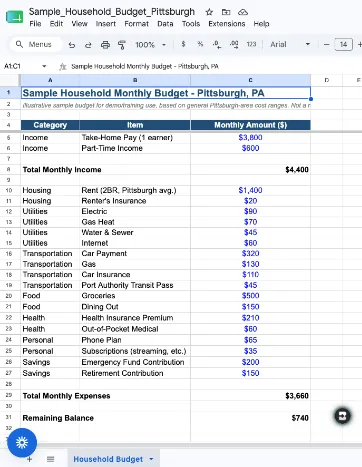
Brisk now works on spreadsheets. Open a Google Sheet or an Excel file and Brisk reads every tab as context for whatever you build next. Lab data, assessment results, a sample household budget for a personal finance unit: ask for a worksheet, quiz, or Boost activity based on it and you'll get one without copying a single cell into a doc first.
Nothing to set up. It's on for every teacher, on every plan.
A few things to know: Brisk reads spreadsheets, but it can't write into them or build new ones. All tabs are read together, so you can't pick just one. And very large workbooks may get cut off.
Multi-Level & Multi-Grade Creation, Now in the New Brisk
August 3, 2026
Multi-level and multi-grade creation is now available in the new Brisk. Ask for a resource across a few grade bands, levels, or languages, and Brisk builds every version at once, then delivers them together as a single bundle.
How it works:
- Tell Brisk what you need: In the search bar, describe the resource and the range of grades, levels, or languages you're building for — or use the language and grade level settings to multi-select directly.
- Answer a few quick questions: Brisk's conversational Create experience will ask the same kinds of questions it always does to support your instructional goals.
- Open your bundle: Every version is generated together and ready to hand out to the right students.
Note: The ability to rework your outputs available elsewhere in the new Brisk isn't yet supported inside bundles. To revise an individual version, use the classic Create workflow.
Welcome to the New Brisk
July 16, 2026
The Brisk extension has a new look, one designed to better support how you work and help you feel prepared for every class, every week, and every school year!
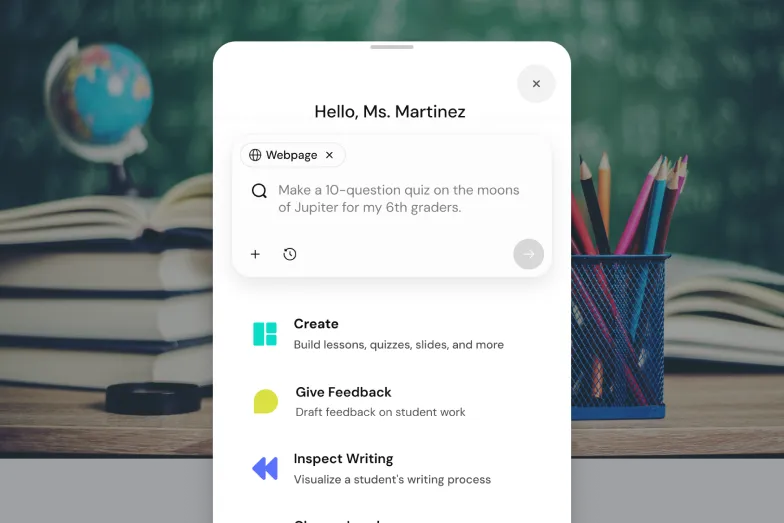
Instead of clicking through menus to find the right tool and then filling out multiple fields, you can simply tell Brisk what you need and it’ll build it. (Don’t worry, you still have the ability to browse your favorite tools if you want to.) From worksheets and quizzes to lesson plans and rubrics, anything you’re used to building with the Create tool is now just a quick conversation away.
How it works:
1. Search for the type of resource you have in mind: Start typing what you’re looking for in the Brisk extension search bar and a list of relevant resource types will appear. No need to remember the proper names of Brisk tools — use whatever words make sense to you and Brisk will figure it out.
(Note that while the new search function will return results spanning all Brisk tools, at this time, only the Create tool will deliver a conversational experience during subsequent steps.)
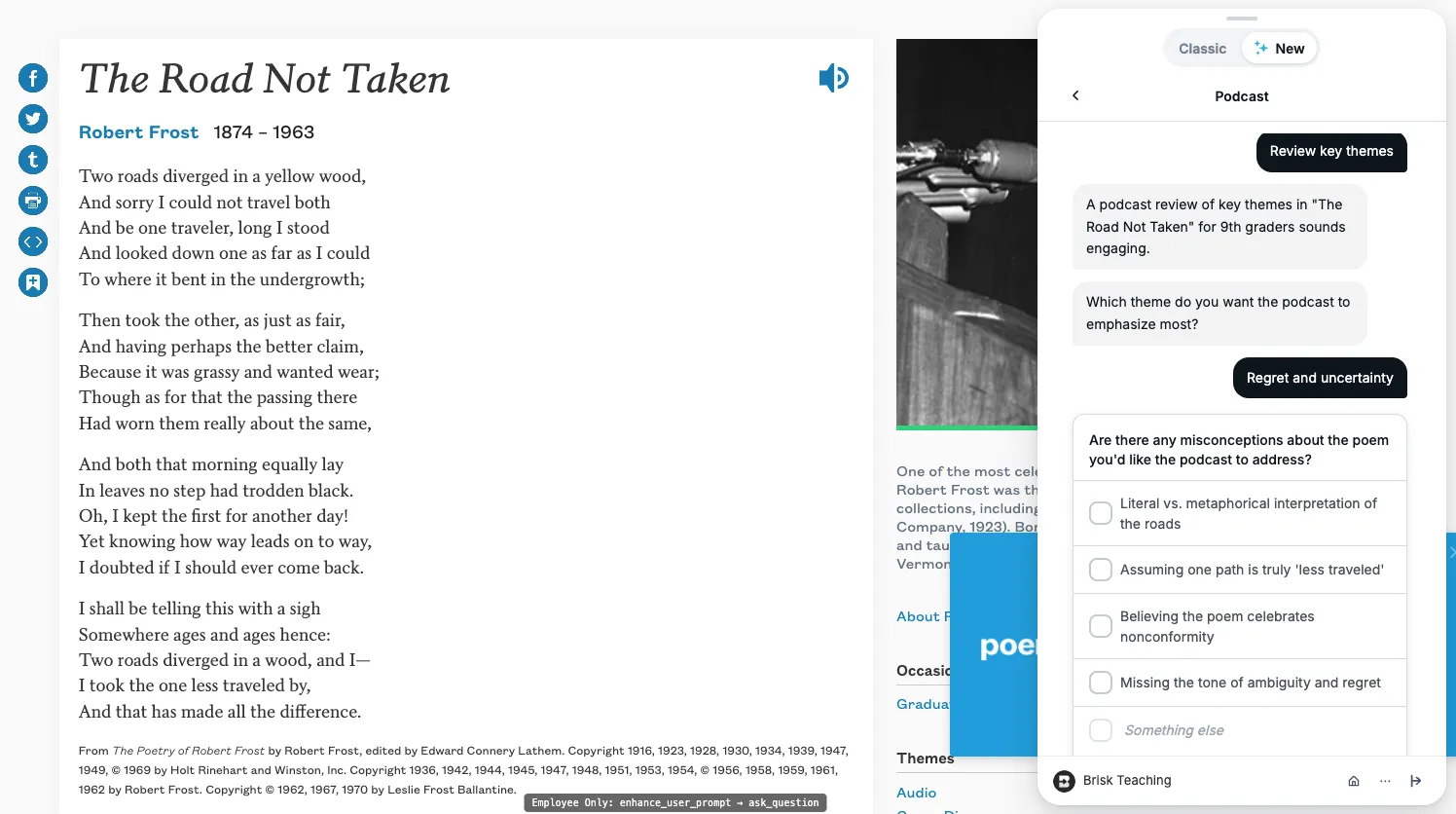
2. Share a few specifics about what you need: In the new conversational experience, Brisk will ask a few quick questions about whatever prompt you provide to make sure it understands what you’re after. Answering these questions is optional, but recommended. (You’ll still be able to use the classic Create workflow, too.)
Depending on the context, Brisk’s questions might look like:
- “What’s the purpose of this exit ticket?” (e.g., a formative check after a day’s lesson, a diagnostic before kicking off a new unit, prep for a summative unit test)
- “Are there any misconceptions about the topic you want this resource to address?” (choose from a list of relevant options or type your own response)
- “Is there anything your students have been struggling to grasp about this topic?” (choose from a list of relevant options or type your own response)
Once you’ve had this brief conversation, Brisk will draw on your responses, your original prompt, your curriculum, and, if your district has Brisk Intelligence, district leader guidance to build a resource that’s fully aligned with your needs and your district’s priorities.
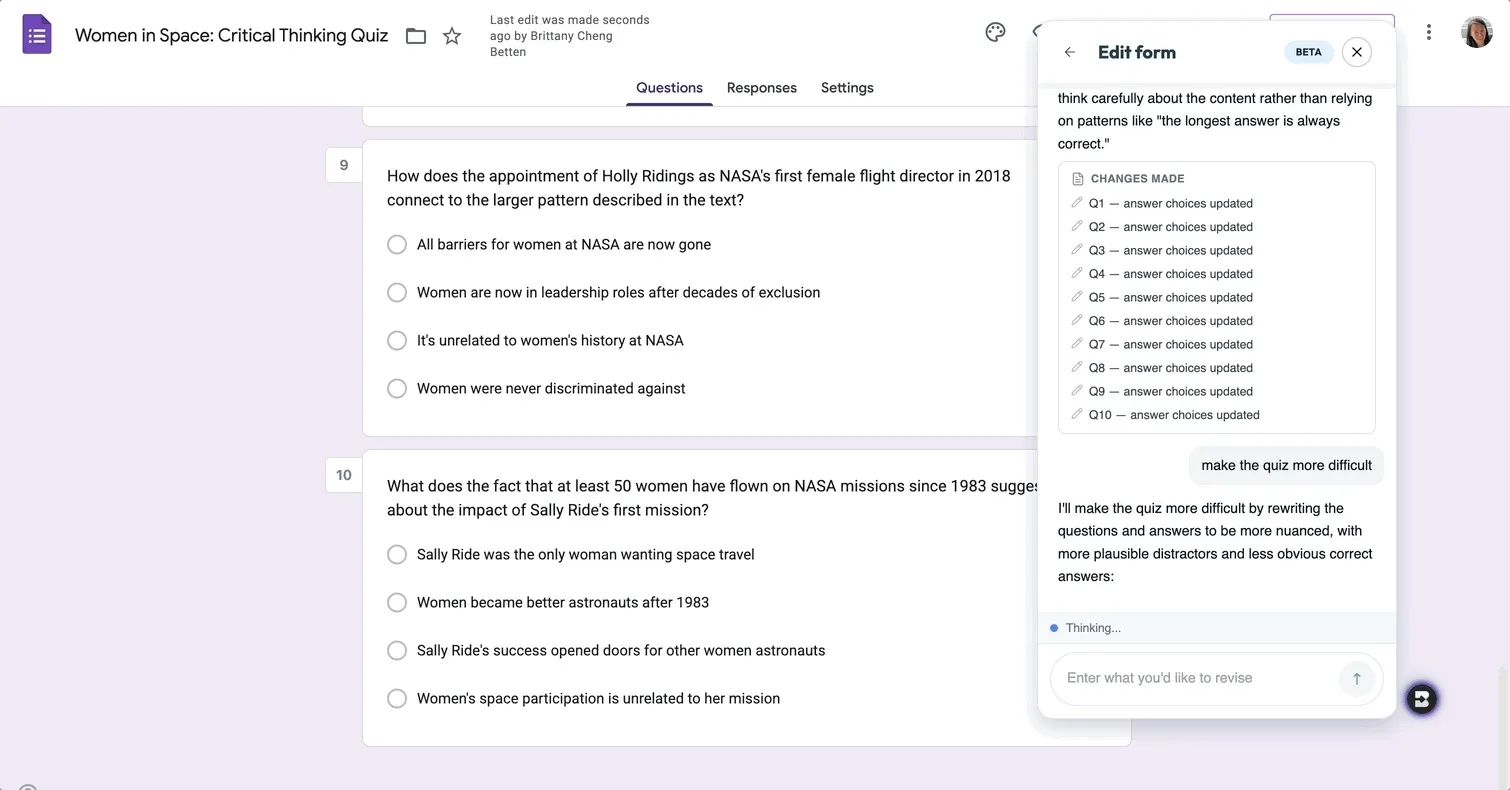
3. Fine-tune the resource until it’s perfect: Chat back and forth with Brisk to make any adjustments to your new resource. As you provide instructions — think: “make this shorter” or “swap the third question for something more challenging” or “add scaffolding for ELL students” — the resource will update right before your eyes. No need to start over or sift through multiple versions.
Read more about the new Brisk, and see the experience in action:
Resources for learning the New Brisk
Use Brisk Tools Directly in Claude
July 14, 2026
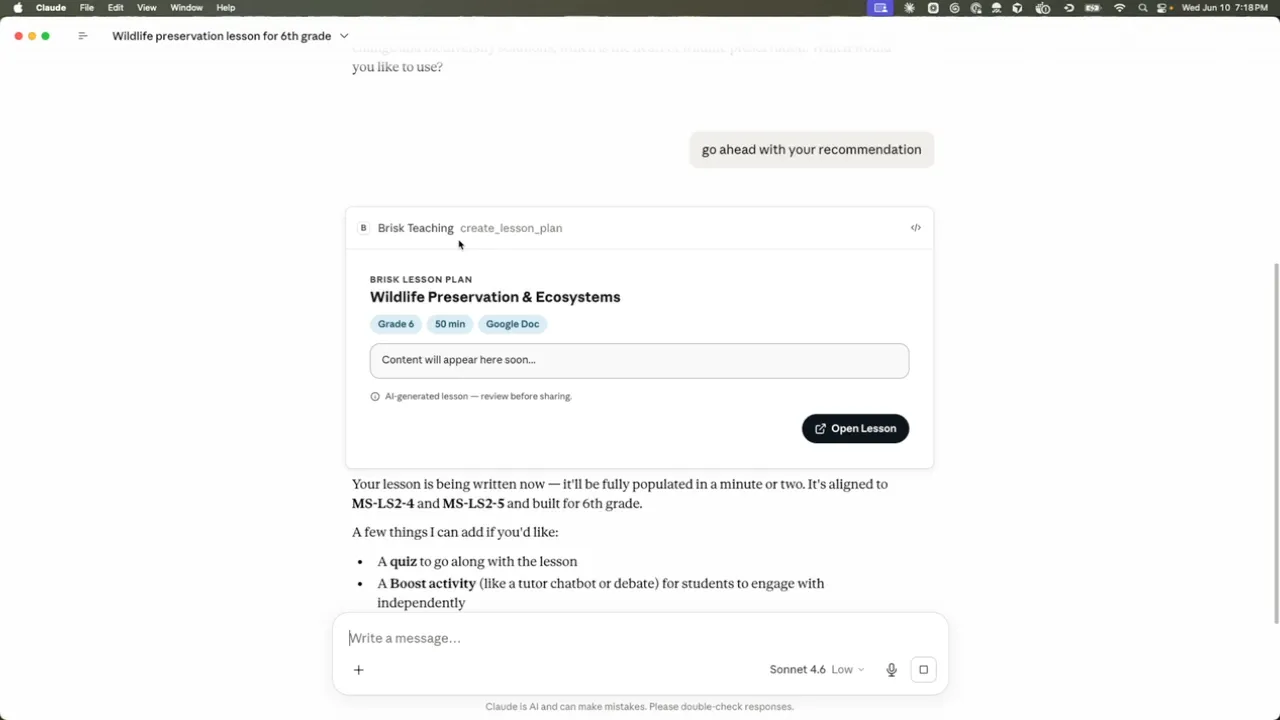
With the Brisk Connector, your favorite Brisk tools are just a sentence away in Claude. Chat with Claude about what you’re working on and it’ll give you ready-to-use links to the types of high-quality instructional materials you’re used to creating with Brisk — no more jumping between multiple browser windows.
What teachers can do in Claude with the Brisk Connector:
- Create Boost Activity: Builds an interactive, AI-powered student activity (tutor, quiz-me, debate, exit ticket, writing coach) complete with learning objectives and guardrails.
- Generate activity ideas: Suggests a set of Boost Activity ideas for a topic — no commitment until you create one.
- Create teaching resource: Creates a lesson plan, quiz, rubric, worksheet, sub plan, or other resource as a Google Doc or Google Form.
- Set up Batch Feedback: Creates an assignment shell for grading a set of student work (you add submissions and run feedback in the Brisk web app).
- List standards: Browses Brisk’s standards database so your materials will be aligned to the right frameworks, grade level, and state.
- Get teacher context: Reads your class names, grades, and subjects (never student data) so Claude can tailor its suggestions.
Connect Claude to Brisk:
- To use the Brisk Connector, you’ll need a Brisk account, a Claude account, and, for any tool that creates a Google Doc or Google Form, a Google account that’s connected to Brisk.
- Open Claude (web or desktop).
- In a new chat, click the + button near the prompt and select Connectors, then click Add Connector. You can also start the process here.
- Use the search bar to find the Brisk Connector and click Connect.
- You’ll be prompted to sign in to your Brisk Teaching account and allow Claude to access it. Click Allow.
- Once connected, Brisk will appear in your list of Connectors and Claude will be able to use Brisk tools directly in your Claude chat.